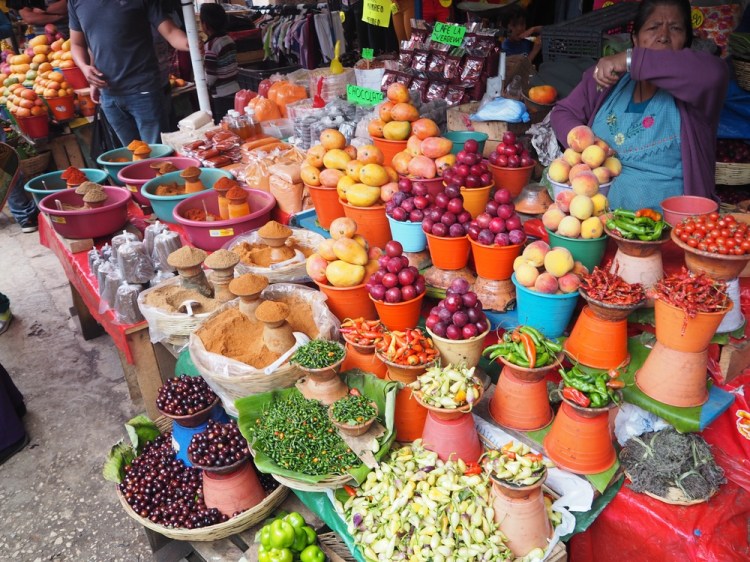
We’ve been to many incredible markets on this trip so far, so it’s easy to get blasé. But the market in San Cristóbal is fabulous. It’s a heaving mass of people, with incredible colours, sounds and smells. As you enter the market, there are people selling boiled or roasted sweetcorn and others with barrows piled high with hairy red rambutans. Stalls are piled high with amazing fruit, vegetables (including lots of things we don’t recognise and of course an incredible variety of chilies) and frijoles. The fruit is incredibly cheap – you can buy a large bag of mangoes, avocados, or limes for just 10 pesos (about 40p). Oranges are the same, 10 pesos for more than a kilo. It’s really difficult not to leave completely laden down. I buy a bag of mangoes to make a crumble, a mountain of oranges to juice for breakfast and of course a large bag of limes to make margaritas! And that’s not to mention all the other regular fruit and veg! We also buy a small metal orange squeezer that we find among the knives, machetes and simple wooden tortilla presses.

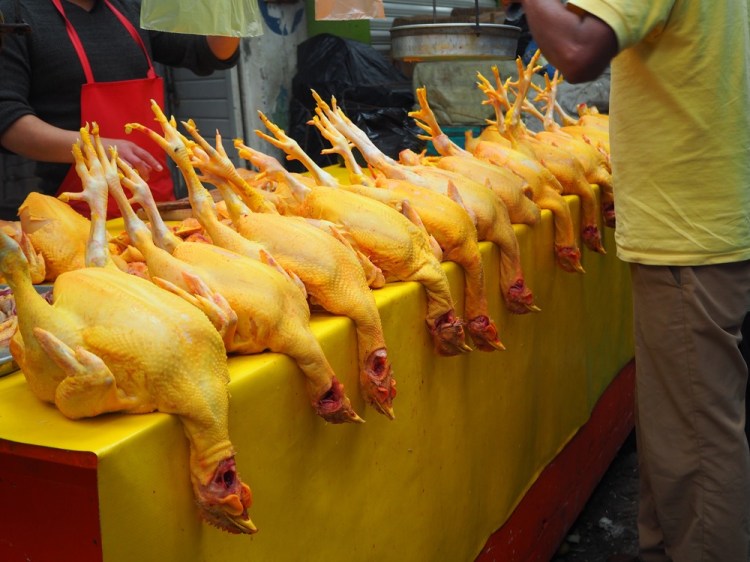
There are lots of colourful and scented flowers, that are also incredibly cheap. I buy three large bunches of agapanthus for less than £1! And then there’s the meat section, in which all the chickens are yellow – I think all the animals in Mexico live on a diet of maize! They’re hanging over the counters in neat rows, their heads hanging over the edge with throats neatly slit and feet stuck into the air. And every meat stall sells chicharron – piles of crispy pigskin!


We climb steadily as we leave the town up a gradual hill for about 30-40 minutes. After a quick break to buy drinks and snacks we press on and shortly leave the road for a track that heads off into beautiful countryside. We soon come to a tiny, very old church next to a couple of large and very old buildings. My guide, Victor, tells me that the nearest of the large houses, which is being renovated, used to be the home of the Bishop of San Cristóbal, until some wars in the 19th century forced him to leave. The house of the Bishop has a beautiful old Spanish tiled roof; the other large house standing next to it is still pretty solid, but has a corrugated iron roof. My first impression is that it is derelict and empty, but as I draw nearer I realise that in one end there’s a tiny shop. Outside, there is a pile of black sheep’s wool with a couple of carding combs and a sack full of recently carded wool. Victor tells me that this is the same wool that’s used for the hairy skirts that we’ve seen the women wearing in the town and in Chamula.
This place is incredibly peaceful with birds singing, the green hillsides, and in the distance a couple of women tending their flock of sheep. Victor tells me that I shouldn’t take any photographs in these villages; the Mayan people people here believe that taking a photograph captures their spirit – apparently they believe the same for animals and objects too.
We continue on our way, off road, and come to an eco-tourist park. Victor guards the bikes while I walk into the park to take a look. There’s a small river running down in the bottom that passes under an enormous natural rock arch. The views from the top of the arch and beyond down into the valley are beautiful, and I see a local Mexican family having a go at Tirolesa, or zip-lining. We’ll have to come back here with the children!
After that, it’s back onto the bikes and after a relatively short climb we begin our descent back into town. It’s been great to get a bit of time to myself and to get some exercise, but I fear that my bum is going to be in a pretty poor state tomorrow!
…It’s Gabriels 8th birthday coming up. Coincidently, it’s also Emma’s 8th birthday two days before, so we decided to have a joint party in our garden. Fi also invites a couple of friends she’s met, either at Millie’s school or simply wandering around town. Their children are more like Millie’s age, but at least it means there will be a decent number of children. And Fi’s French friend Alice has a son Gabriel’s age, so at last he will have another boy to play with!
There’s a shop near Millie’s school that sells piñatas, so I go off secretly to buy one. The shop is incredible – it’s a pretty big shop, floor to ceiling with sweets of various sorts; all except one shelf that bizarrely is dedicated to health food! There are plenty of large piñatas hanging from the ceiling; most are either definitely for girls or definitely for boys so my choice is limited, but I manage to find one in the shape of a minion that should do the trick! Buying sweets to fill the piñata is also a challenge. The smallest bags I can find contain 1 kg of sweets, so to get any sort of variety I’m going to have to buy an absolute mountain! At least there will be a good number of children at the party, so they will be spread fairly thin! I’m also on a mission to buy papel picado but it’s surprisingly difficult to find. I end up with a plastic version to decorate the garden – not so eco-friendly but it should last longer.
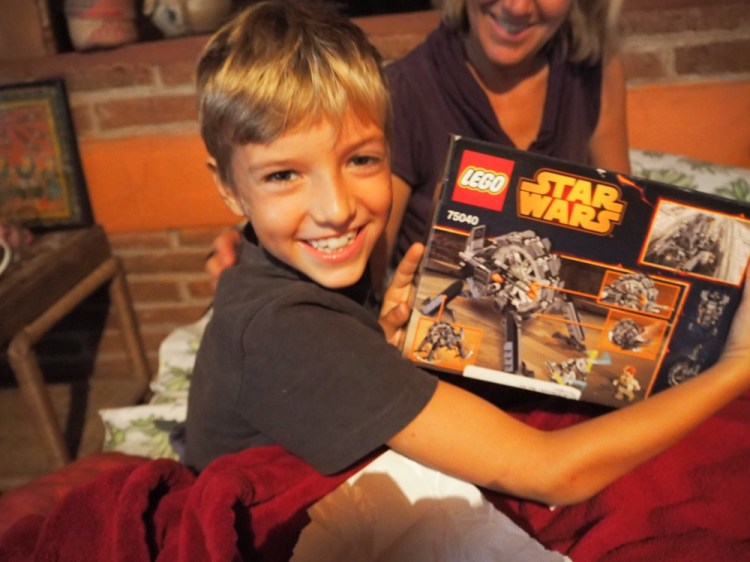
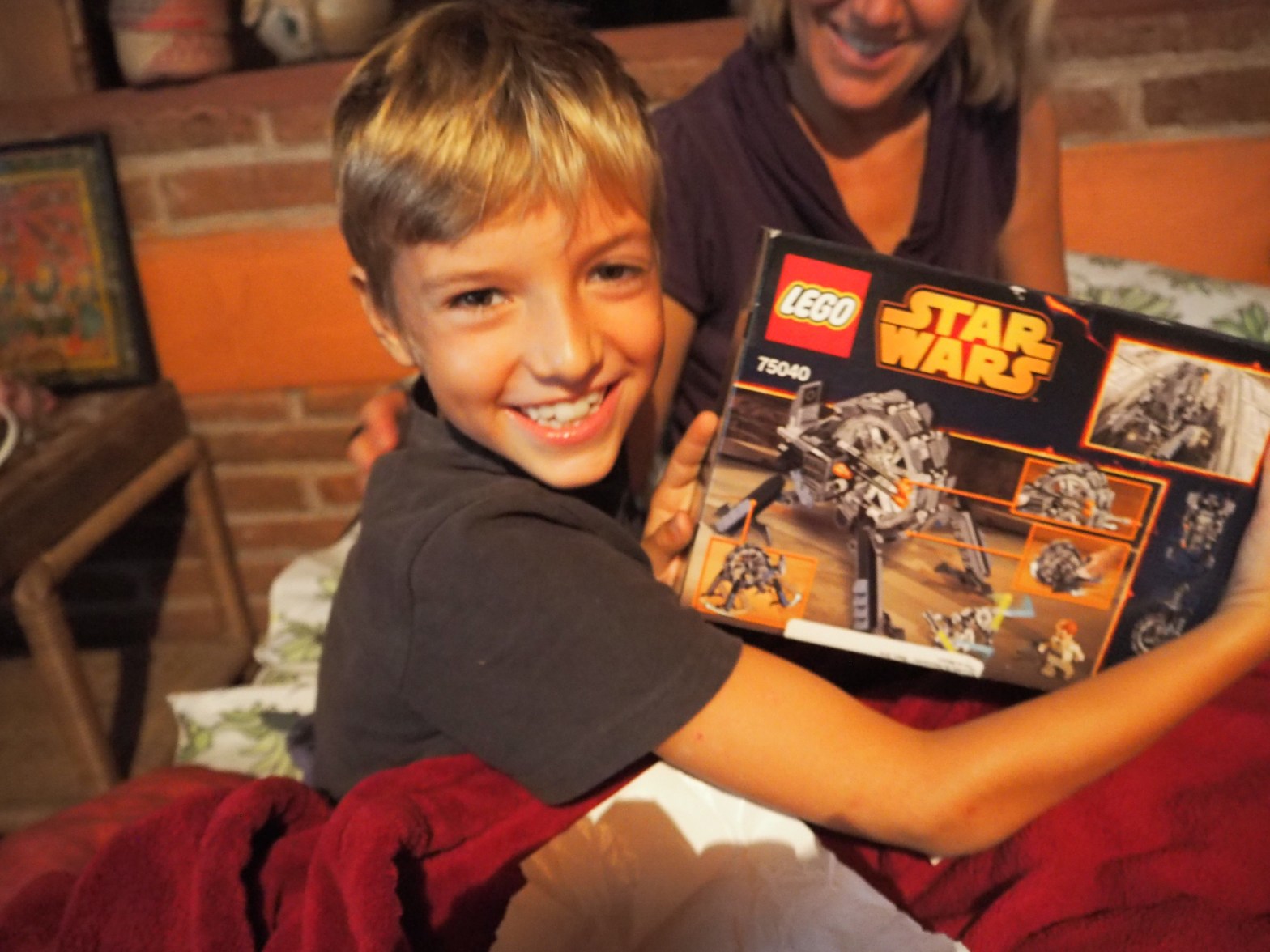
Gabriel has been convinced he’s got no chance of getting Lego for his birthday, but we managed to find this in Ecuador, so he’s really made up!
The party is a great success. The weather holds up and we have lots of games in the garden. The children take Gabriel’s newly acquired baseball bat to the piñata hanging in the tree. It’s only now that I realise it’s made of pottery rather than the papier mâché variety we’ve had at home before.
The shards of broken pottery are soon followed by a cascade of sweets. It’s all great fun And we just about manage to avoid children getting clobbered over the head with a baseball bat!
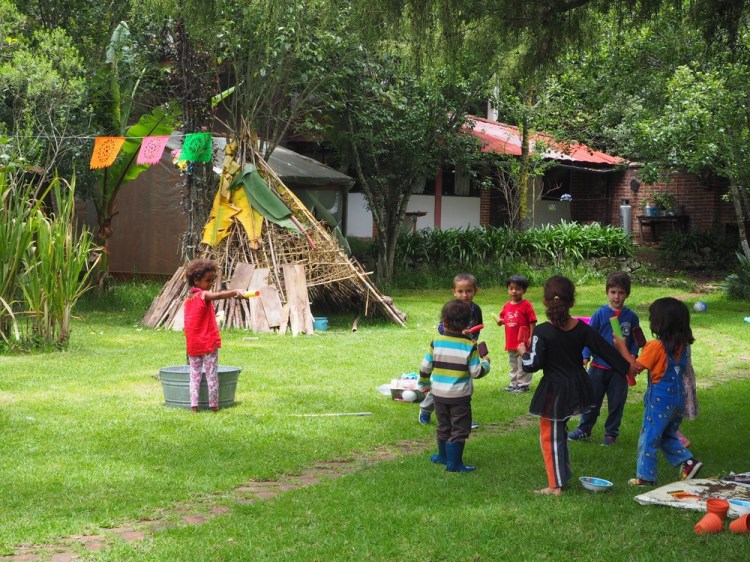
Some of the little ones playing in the garden – you can see the fabulous den that Marta’s son Luiz has built
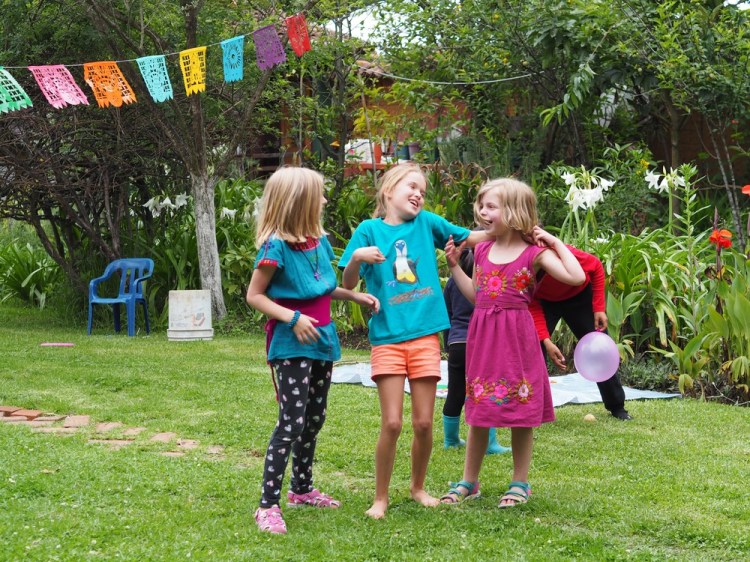
Jemima, with school mates Emma (whose birthday it also is) and Briana
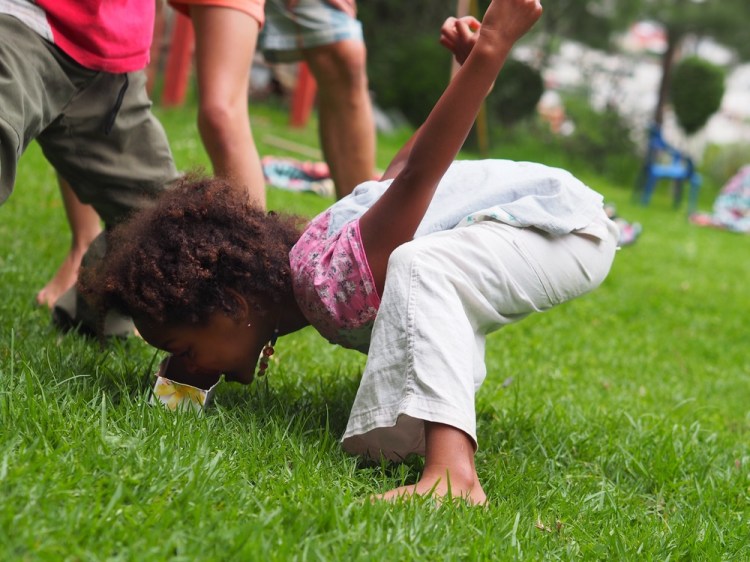
Millie does really well in the cereal box game!
We take a taxi out to Zinacantan, which is very close to Chamula but surprisingly different. As we arrive, we realise that everybody here (and I mean everybody) he’s wearing ornately embroidered purple clothes. The women, embroidered tops over dark skirts; the men, tunics.
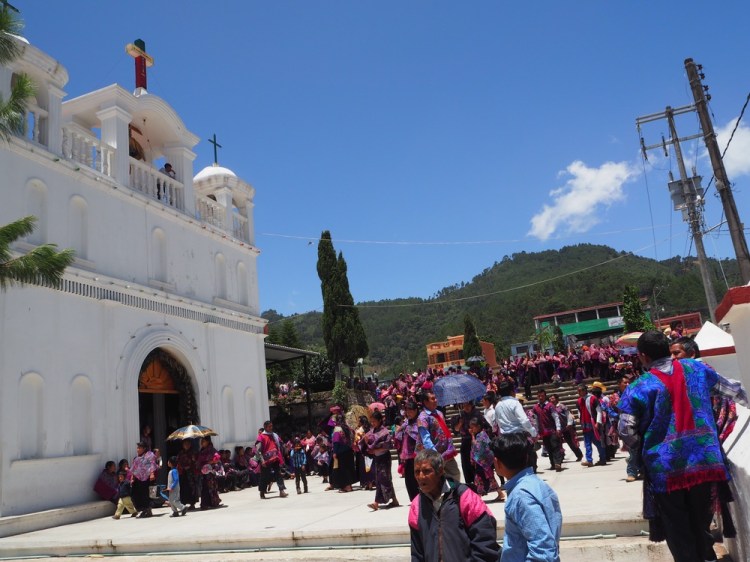
We’ve been told we shouldn’t really take photographs here, but I managed to discreetly get some shots. There is a square with a band playing loudly. When we arrive, there is a big audience in the square, but by the time we leave it’s completely emptied. There is also a small market where women are selling lots of the embroidered garments. And of course, there is plenty of roasted sweetcorn. It’s extraordinary how different the dress is here compared to Chamula, which is literally just down the road – and we really get a sense that this is truly their everyday life and culture, rather than being worn for the benefit of tourists.
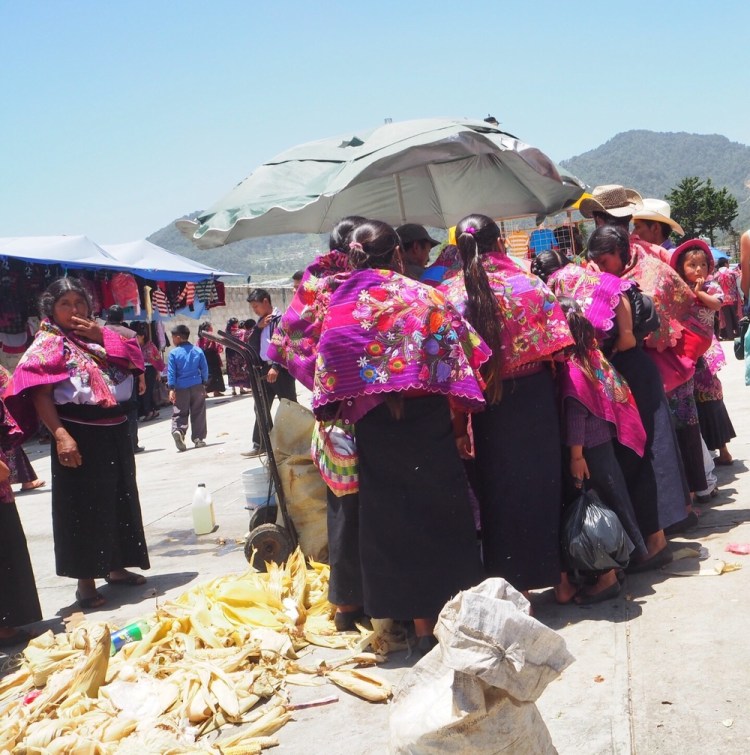
The typical group of women in Zinacantan, with their beautiful embroidered tops

Zinacantan church
 Five Go Round The World