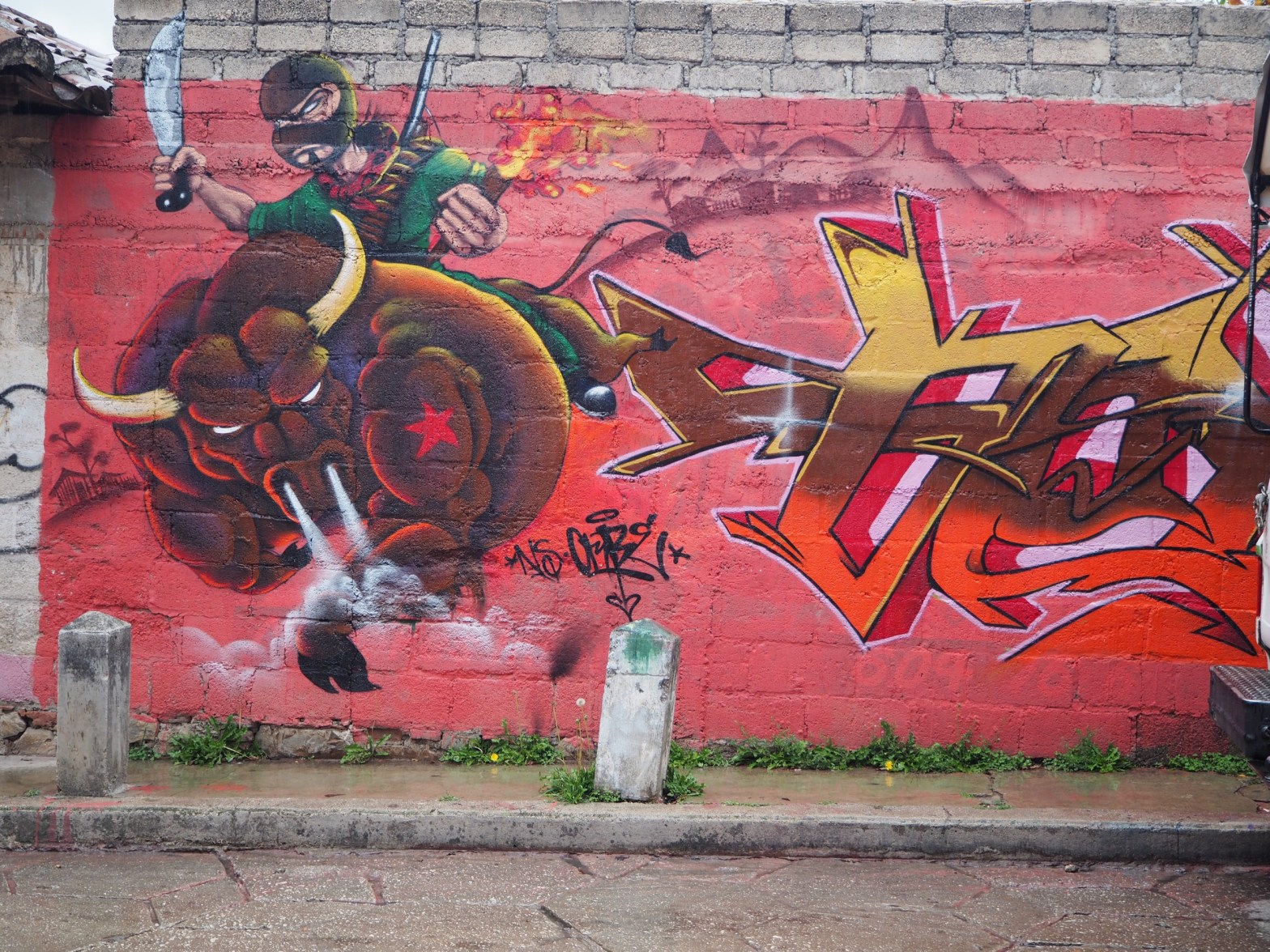
It’s Immediately obvious that San Cristobal is a very political city. Political party advertising is everywhere (particularly the Verde party); there is political graffiti on many buildings and the presence of the Zapatistas is everywhere, from woven masked dolls in the markets, to postcards in the shops, to cafés that openly state their support for the Zapatistas. And there are political demonstrations against the government every day, mainly in the main plaza in front of the cathedral. But it seems there is corruption at every level and despite the protests, people are completely disillusioned with the whole set up and process.
Elections…
There are elections coming up and we’ve been told that there could be a bit of trouble. We discuss it at some length in our Spanish lesson – our teacher Victor tells us that the turnout for elections is usually extremely low (around 20%). Apparently, people are resigned to the fact that the incumbent PRI / Verde coalition are immovable, as a result of the corrupt electoral process. He tells us that in the big towns, the voting is pretty well policed, with monitors present at polling stations. For example, voters have their thumb died with indelible link so they can’t vote more than once. However, this is irrelevant since most of the votes lie in the surrounding Pueblos in the countryside, not in the cities. And there it’s completely different. People are poor and it’s very easy for the political parties to buy votes. Party workers literally pay (with money or gifts) to borrow the ID cards of people in the villages and then go and deposit a large pile of voting papers in the ballot box. The volunteer monitors at the election stations apparently don’t bat an eyelid. Maybe they’ve been paid off too?
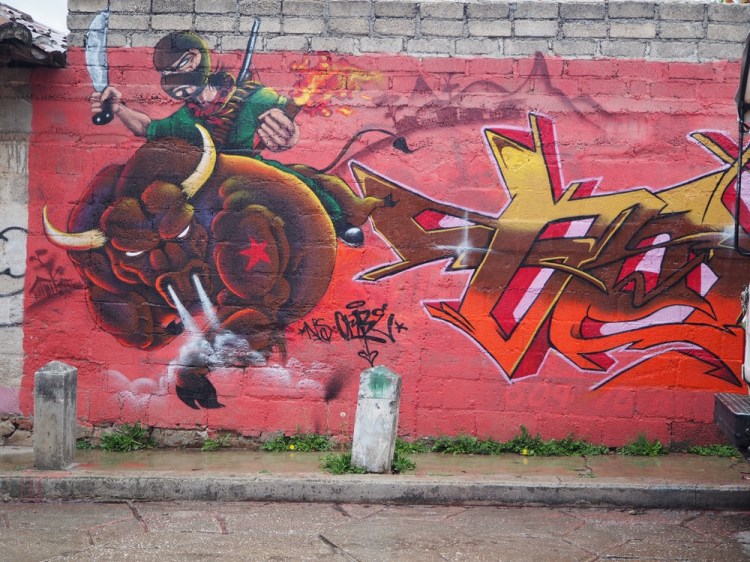
Our other teacher, Berenice, tells us that she refuses to vote on principle, because of the corruption. She once worked as a volunteer, monitoring elections, but was shocked by the experience. She says that in addition to the vote buying, the counting is rigged. For example, she says that if the incumbent party (PRI) gets 400 votes and another party 600, after the counting, the results will show that PRI GOT 600 and the opposition, 400. So people are completely disillusioned with politics and assume that all the parties are as bad as each other.
We question why this situation is tolerated but Victor tells us (several times) that Mexicans all live for today. He says that as long as people have a job, enough money to live, their family and friends, then they don’t care which party is in control and are resigned to the fact that the political process is broken.
Polling day is on a Sunday and we’ve been advised to stay home. In fact, we go to an orchid garden on the north edge of town, taking a taxi there and back. We pass a few polling stations, all of which are completely calm. We see no signs of any disturbance anywhere. The next day at school, Victor shows us the results of the election. They PRI / Verde Coalition have won about 80% of the votes in San Cristobal City, the remaining 20% split between a raft of other parties. And the map of Chiapas shows that they have completely swept the board across the state.
The teachers…
We ask Victor about all the anti-Government protests that are taking place – he tells us that this is in the Mexican culture (it seems even more so than in France!). People like to protest. The teachers seem to be the group that protest most: either for more money; on behalf of the 43 students that disappeared; against the education reforms; or simply against the government. They march, block roads, take over toll booths, go on strike. Apparently, they are the most powerful union in the Mexico. However, the government strategy seems to be to simply ignore these protests. Victor tells us that in Oaxaca, the ‘maestros’ went on strike for a year, for more money. The government strategy was interesting! They simply ignored the teachers and continued to pay them their old salary. That’s a whole state, with no kids being educated for a year. Eventually, parents and families of children who should be at school put enough pressure on the teachers to go back to work. Victor tells us that the government don’t care if the children don’t go to school; an uneducated population is easier to control. He’s not the only one to say this, but it does seem at odds with the governments reform agenda. They want to bring in regular exams to improve the quality of teaching (the subject of many protests). In the past, teaching jobs have been sold and inherited; once you have a job, it’s a job for life. Mexico has historically had the highest cost and the lowest quality of primary school education of all OECD countries. The government now seems to want to change this, but they are paying the price for allowing the teachers’ unions to build immense power.
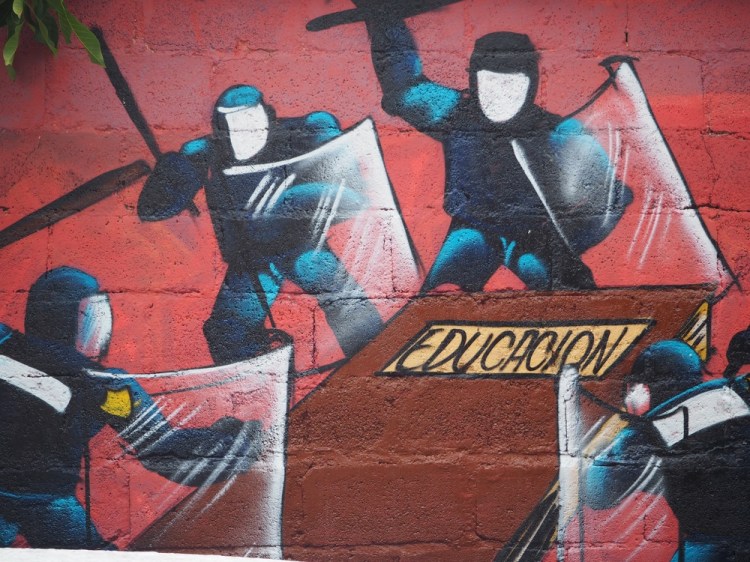
But there appears there’s plenty of corruption within the teachers unions themselves. Apparently many teachers get paid just to work for the unions, without ever setting foot in a classroom. And the head of one of the two large unions left Mexico with $22 million!
Local services…
In another lesson, Elizabeth mentions that their babysitter (for their 2-year old son, Peter) has been experiencing problems with her water provider. Apparently there was a meeting which got extremely heated, to the point that someone pulled out a gun. It’s not clear whether or not anyone was hurt. Victor tries to explain the system here in San Cristobal…. apparently the city is divided into three zones, each having their own water provider. One of those is a government provider; the other two are private. If you live in the zone with the government provider, you only receive water about 3 to 4 days a week. In the other two zones, the ‘companies’ responsible are in fact an extremely informal and loosely formed group of individuals. Water is very cheap; to pay your bill, you need to go and pay someone who works for the appropriate ‘company’ – usually in a shop or cafe. They have no office. Occasionally there are disputes about who has paid what and who owns the water. Victor reckons this is what probably happened. I asked what happens to all the money that families pay to these organisations. Apparently it’s all simply goes into the pockets of those individuals involved. There is no money available for maintenance work or repairs. I ask what happens if, for example, I have a problem with my drains such that my toilet won’t flush and the blockage is off my property. Apparently no one comes to fix it – it’s up to me to find my own solution. The impression I get is that no-one is interested in investing for the future, for example by improving infrastructure. Victor says it’s the same with phone and Internet services. He says that the government is just like the people; they live for today (ie maintaining power) and are not at all interested in the future. As for the poor service provided by the government provider; of course the electoral process is broken so it doesn’t matter what level of service they provide – they know that they’re not going to be voted out of office.
Zapatistas…

Chiapas is the poorest state in Mexico, with a high proportion of the population being indigenous (more than 25% speak at least one Mayan language) so it’s perhaps not surprising that it’s the home of the Zapatistas. They are a political / ideological group that came to the world’s attention in 1994 with an attempted revolution that was rapidly and brutally put down by the government. Their purpose is to support the indigenous and other people people of Mexico who have been (undeniably) oppressed since the Spanish arrived over 500 years ago. They called for better conditions for indigenous peoples, protection of communal land and an end to government corruption and human rights abuses. There now appears to be a Cold War between the Zapatistas and the government; the Zapatistas now live in their own autonomous communities called caracoles. They ask for no support from the government and In return, The government effectively lets them govern themselves. They have their own schools, hospitals and ambulances. There is much greater equality for women than in mainstream rural Mexican society – when they presented their revolutionary laws in 1994, these included the women’s revolutionary law, as follows:
1. Women, regardless of their race, creed, colour or political affiliation, have the right to participate in the revolutionary struggle in any way that they desire and capacity determine.
2. Women have the right to work and receive first salary.
3. Women have the right to decide the number of children they have and care for.
4. Women have the right to participate in the matters of the community and hold office if they are freely and democratically elected.
5. Women and their children have the right to primary attention in the health and nutrition.
6. Women have the right to an education.
7. Women have the right to choose their partner and are not obliged to enter into marriage.
8. Women have the right to be free of violence from both relatives and strangers.
I may disagree with some of their anti-capitalist and globalisation views, but what can you disagree with out of any of the above? My impression is that they’ve failed to achieve much of what they set out to, but life in Zapatista communities seems arguably better than in non-Zapatista rural indigenous communities.
One of the challenges here in Chiapas is that the Zapatistas believe that whoever works a piece of land owns it. Therefore it’s perfectly possible to believe you’ve lawfully purchased a piece of land, but the reality of occupying and using that land maybe quite different.

So from all the conversations I have had here so far, it seems that the politics in Mexico are extremely challenging to say the least. I’m not sure I could live here. The level of corruption and apparent attitude of the government feel so alien and the are so many things we take for granted in the UK that simply don’t apply here (for example, having an electoral process that, despite its flaws, broadly works; having a police force and judicial system that are independent from each other; etc). And of course, overlaying all of this is the narco problem. How on earth Mexico can break free of these immense problems, I simply don’t know. I have to say, as interesting as they are, I find these political discussions with our Spanish teachers sad and depressing.
 Five Go Round The World
It was ever thus I’m sure- but S children all we saw was the colours, flavor and sunshine
LikeLike
We there’s still plenty of those, too, that’s for sure!
LikeLike