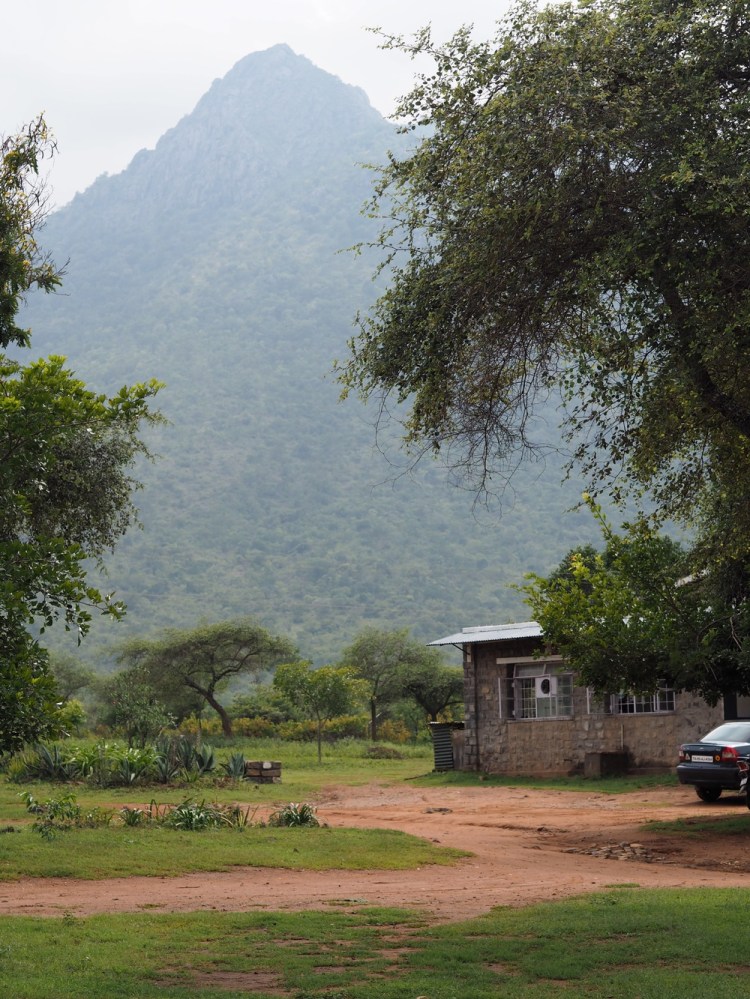
We drive for 2 hours out of Mysore and within a short time, the landscape has completely changed. We are now in a tiger reserve, where wild elephants and tigers roam though. There are now only 50 in a National Park the size of 320 square km, so you have to be pretty lucky to see a tiger. We decide to set out with low expectations, though when we talk to the locals, all of them have sighted one recently, so it bodes well.
We stay at Wild Haven, a simple un-glamorous but thoughtful and comfortable homestay surrounded by electrical fences (though this doesn’t appear to have deterred large wild animals from coming in to the camp before). It’s run by a lovely man called John. He goes out of his way to organise a trip for us to visit a local school, clinic and adult education centre, where local girls from underprivileged backgrounds come to learn computer skills. The children find this fascinating. The school kids are all incredibly well behaved, the teachers clearly have the upper hand here. Although the classrooms are quite sparse, the kids all have their own basic good text books and colourful drawings are strewn across the washing line like bunting, decorating the rooms. All their shoes are parked outside neatly. The children are all wearing neat clothes, and the girls wear their hair in meticulous plaits and bows. They recite their hellos and their goodbyes in English. It’s an impressive and happy school.
The lodge has it’s own lookout tower overlooking a water hole, where we hope we might catch sight of a few animals. John warns the children not to wander beyond the areas of cut back grass- only a few weeks ago a British woman was killed by a leopard outside the precincts – this adds to the frisson of the place, though it holds back the children’s outside play.
We head out in the jeep in the evening to see if we can spot any wild animals but return a bit disappointed! We have spotted deer, wild pigs, lots of monkeys, an eagle, lots of beautiful birds, but nothing large and dangerous! I can’t help thinking that the interefering noise of cackling/ arguing children and me shushing them in the back has helped to scare away any potential animals. The children don’t seem to get the notion of SILENCE in the wilderness. Sadly we return, a bit disappointed, but at a supper, a few hours later, one of the trackers comes in – “Do you want to see a wild elephant… .????” He exclaims . YEEEES! we all shout, put our forks down and scramble quickly into the jeep. A matter of metres away from the entrance to the camp is a tusker, standing alongside the road. We drive up almost next to him. He is knocking over a tree, and scraping off the bark and putting it in his mouth. It suddenly becomes very thrilling when the driver quickly puts the gears into reverse when he thinks the elephant is going to turn sideways on us… Though not sure reversing down a track in the dark would feel particularly reassuring either. We return to finish our curry, happy punters.
After supper our host John lights a bonfire and we all sit round and chat. His company is stimulating and informative.
Following on from a short Indian history lesson, which we gave the children, prompted by Mark and I watching Gandhi at Casa Susegad and seeing Gandhi’s face on posters in Mysore, Jemima made a comment that she expected everyone we met to consider us as enemies here in India, so she was surprised when we say where we come from, that their faces light up and they want to have photographs taken with them (not the parents, just the kids !)
Chatting to John by the fire, he gives his perspective on the British influence here. He points out that the Bristish didn’t take India from the Indians, they took India from the Moghuls . They had their Maharajahs and they lived the life of luxury and ruled with great cruelty.
When Emperor Shah Jahan commissioned the building of the Taj Mahal to house the remains of his beloved wife in Agra, in 1632, he was intent on building a mausoleum like no one had ever seen before, or could ever to be replicated. In order to achieve that he had the architect’s eyes gouged out and the hands of the 30,000 Taj builders cut off. Cruelty was a daily part of life before…
He also stated that whilst the British behaved badly, there is no doubt of that – and their greed in the end was their downfall, the British left a long lasting legacy, much of what they achieved was generally respected. John believed the British improved most people’s lives. The infrastructure can be seen everywhere. The roads, the schools, the hospitals. The railway network here is incredible, linking up every bit of rural India and even the heritage sites were restored to their previous glory, restored lovingly as though it were their own culture.
I can’t proffess to be a Historian, but maybe John assuaged a little of my National guilt, and helped me to understand why we continue to be liked by Indian people (excuse the massive overgeneralisation).
I wish we were staying here longer both here in Masanagudi but also India. Four weeks just isn’t enough. ….
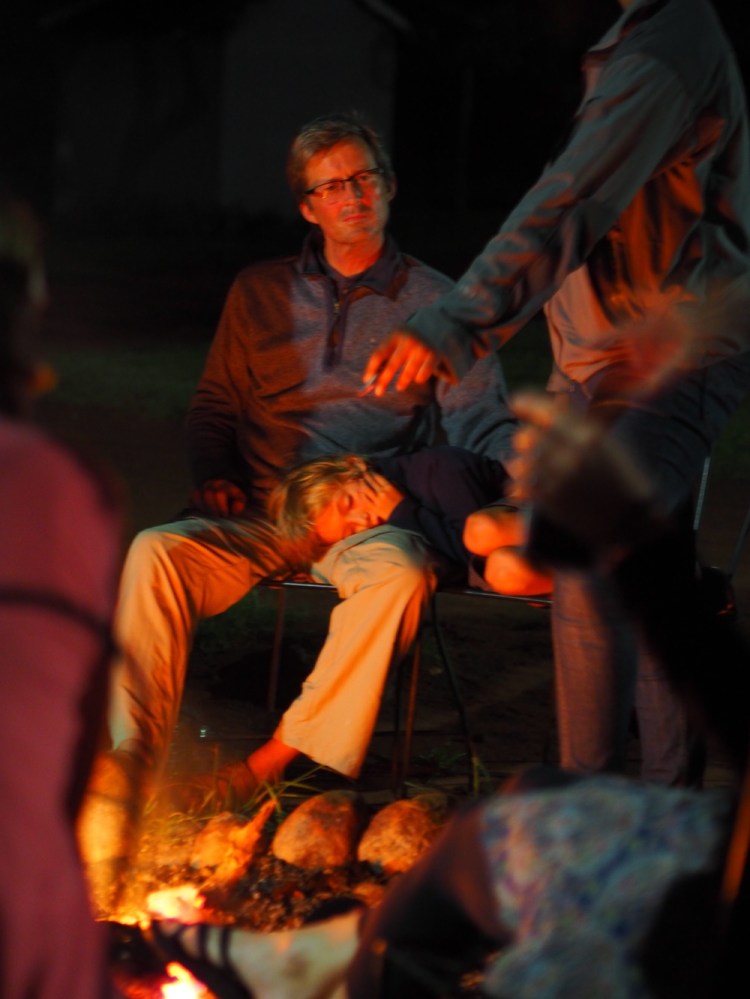
evening chats around the bonfire
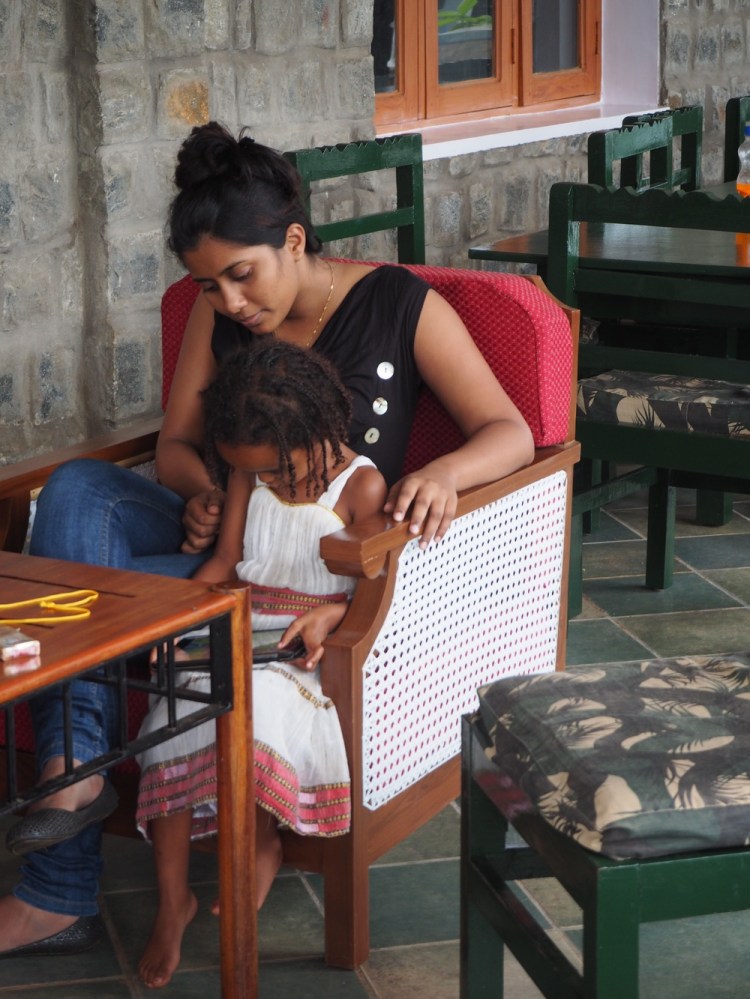
Millie makes a friend
 Five Go Round The World