Of course we have strong emotional connections to Ethiopia and our time here 3.5 years ago was such a positive experience for us all. But this time we don’t have the emotional intensity of an adoption overwhelming our trip, so perhaps we can be a little more objective…
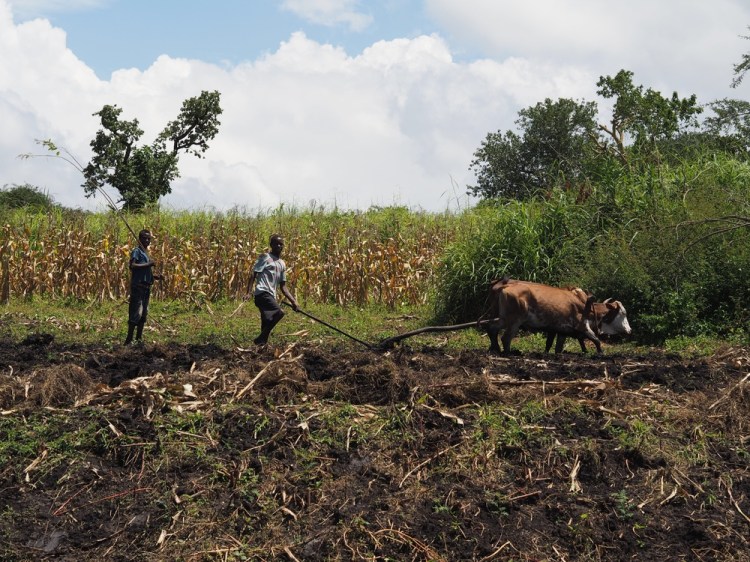
Hard, hard work in the fields
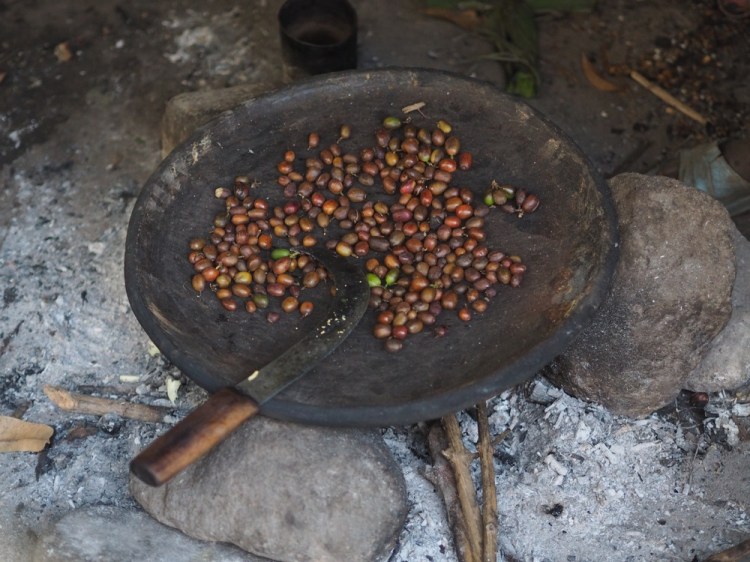
The aroma of coffe roasting is certainly one of THE smells of Ethiopia
We loved being in the countryside; it is so beautiful and GREEN at this time of year. Different shades of green, wherever you look, with the teff and rice zinging out from the other more muted shades. I don’t remember seeing a single tractor – all the ploughing is done by hand, so oxen and donkeys (the main means of transport) are fundamental to rural life. And people walk a LOT. It seems there is little time for relaxing – everyone is busy and busy usually involves walking.
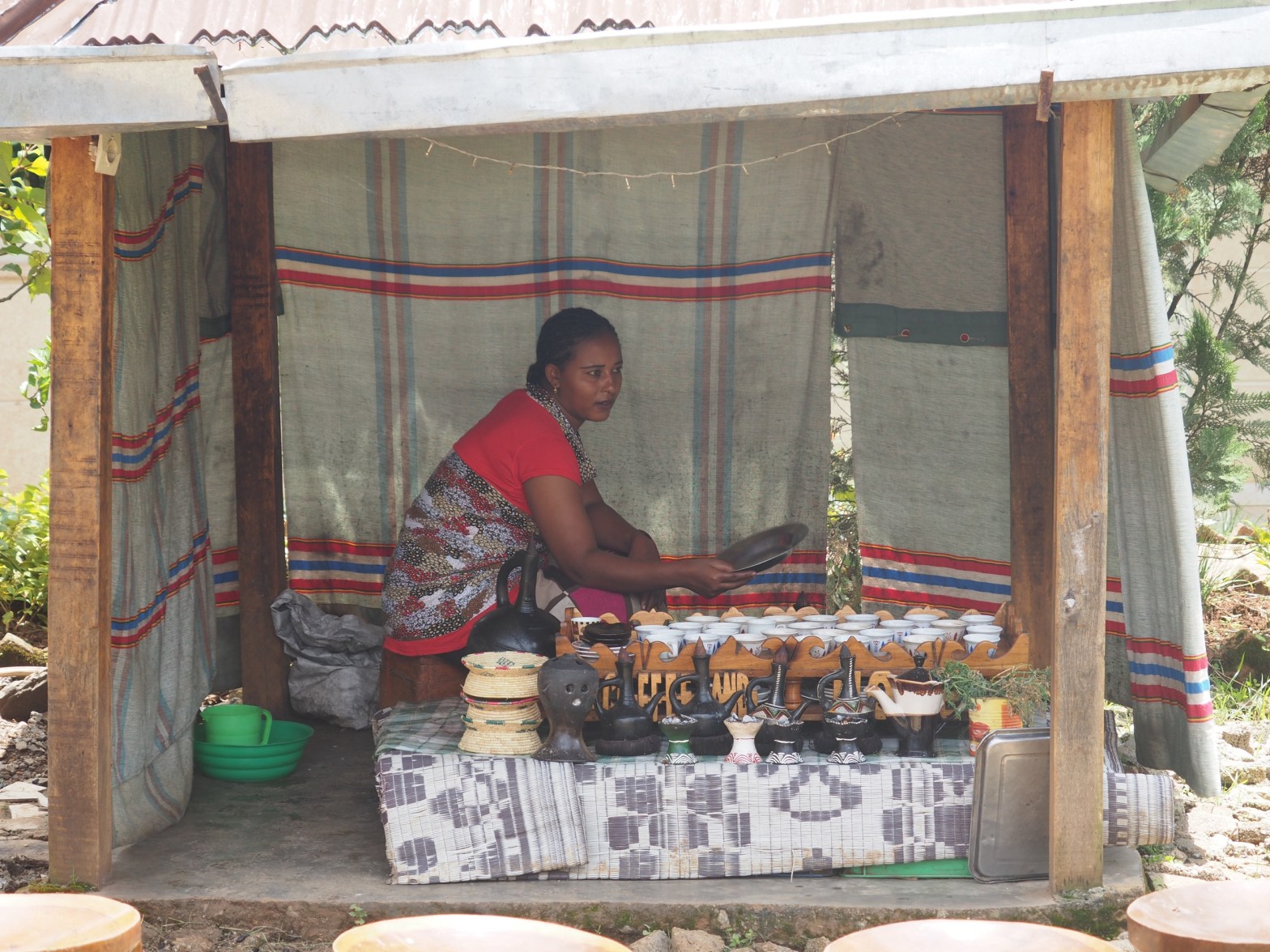
Coffee obviously originated here and is woven into the fabric of Ethiopian life. There are beans being roasted and coffee being brewed in traditional pots over charcoal wherever you go (no instant coffee here!).
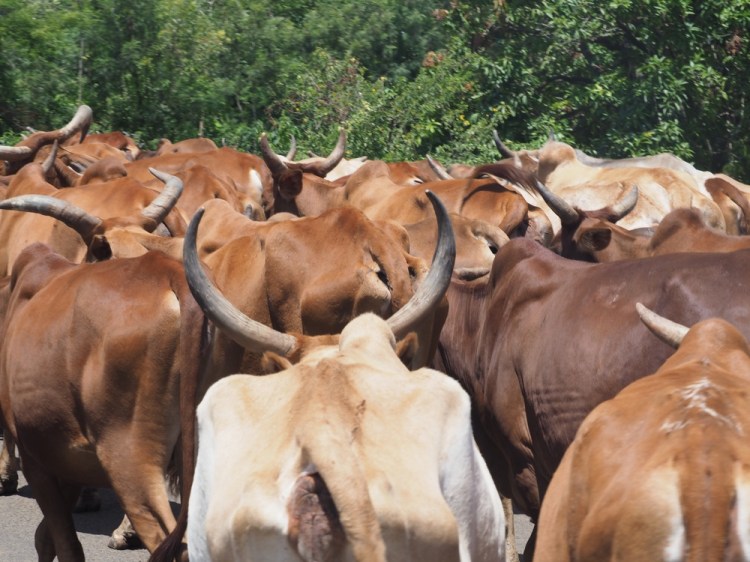
A typical traffic hazard
This is a densely populated country, so unless you’re way, way off the beaten path there are people everywhere. The towns and cities are heaving and the roads in the countryside are the arteries of the country, the people perpetually flowing in both directions. It’s impossible to stop on a road without being surrounded by people within a couple of minutes. The hazards when driving are not other vehicles, they are people and their animals (and potholes). The people are extremely friendly and cheerful, despite (in many cases) their hard lives. I’ve never once felt threatened or unsafe, and a big wide smile is never far from people’s faces. In the villages there are churches next door to mosques and everyone seems to rub along very happily, in stark contrast to many of the stories in the news these days.

The endless flow of people along the roads.

Fields of green
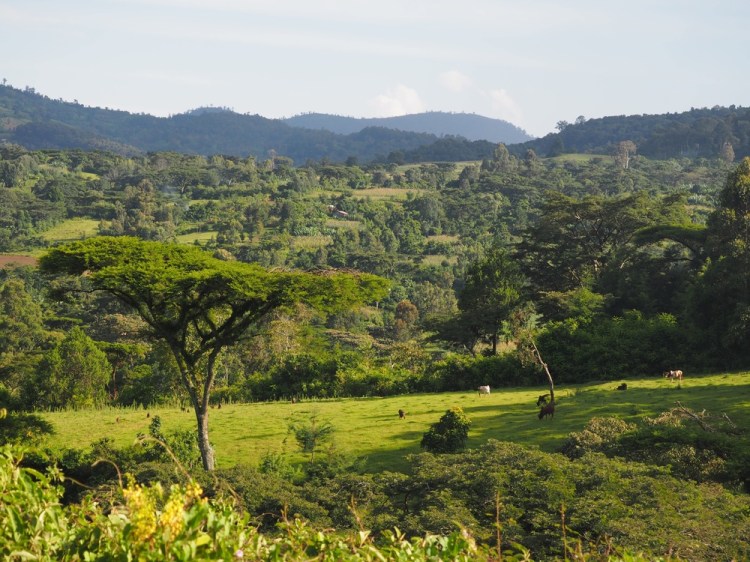
More shades of green
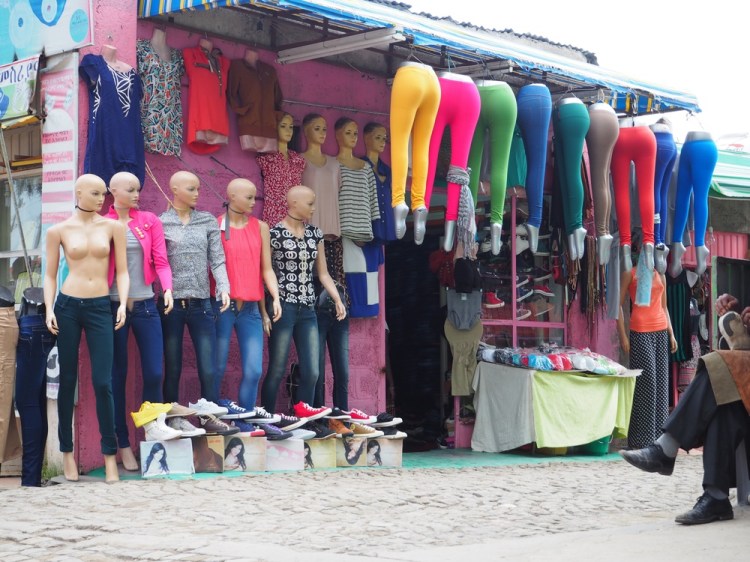
Whenever we saw these bottoms we knew we were almost back to our guesthouse! There are THOUSANDS of these mannequins in Addis.
In Addis, we are extremely grateful to Abdi and Tsebay for having us in their guesthouse. It was lovely to have somewhere familiar to return to after each of our trips and great to see all our children playing with Natti, Enata and little Nahom. Addis is a hive of activity with everyone trying to make a buck as best they can, whether it’s running a ‘fashion’ clothes shop with the ubiquitous row of (white!) mannequins, hawking chewing gum or bootleg DVDs, bringing firewood down from the Entoto hills or shining shoes. And of course it has more than its fair share of beggars: women at traffic lights with tiny disheveled babies or cripples, many of whom have come into the big city from the countryside.
This is a difficult country in which to travel with children. There are no parks or green spaces to just let them run and play. They don’t want to be continuously travelling and seeing things, they want to stay put and just play. But the places in which you can do that are very few and far between, and expensive. It’s not at all developed in terms of tourism, so nice places to stay are expensive and there are very few attractive places to just sit and relax (we resorted to the Hilton pool several times). Travelling is expensive, too, unless you’re happy to use public buses (there are virtually no trains). In the countryside you need a driver and a decent 4WD and of course that’s not cheap. Cars are unbelievably expensive here, due to govt taxes. A totally clapped out Lada taxi with most of the working parts hanging off and which would have absolutely no chance of passing an MOT in the UK will set you back about £5k. A 6-10 year-old Landcruiser in not great nick (cars don’t wear well here) goes for £15k+. So we’re way over our daily budget here and will just have to claw it back later.
Then there’s the quality of just about everything. Ethiopia is clearly developing and moving ahead at a fair clip. Signs of investment are everywhere, the Addis skyline being dominated by eucalyptus scaffolding and new roads being built everywhere. Even a new railway line from Addis to Djibouti. But equally, all the signs are that the quality of everything is really poor. We’re told that all the roads built by the Chinese simply don’t last. Loos don’t flush, showers don’t work, doors don’t lock & unlock, fixtures and fittings are falling off the walls wherever you go. Obviously it’s a harsher climate than at home, but last time we were here we stayed in a hotel in Mizan Tefari that was brand new; 3 years on and you’d swear that the same run-down hotel (with not a working loo to be found) is at least 20 years old. There is a govt monopoly on phone networks and apparently they screwed up the transition to 3G, so there is insufficient capacity and it often takes half a dozen attempts to connect a phone call.

Injera and shiro – a real staple
Food is such an important facet of one’s experience in a country and while I do enjoy Ethiopian food, I can’t eat a lot of it and couldn’t eat it everyday. It didn’t help that I was sick the first night we arrived and while I’m sure it wasn’t caused by what we’d eaten, my body seem to make that association. The children enjoyed injera (even Millie), but this is the first step in educating them to enjoy spicy food and it’s taking time! Thank goodness the Italians brought pasta and pizza here in the 1930’s! Hygiene generally has been a real challenge. Between us we’ve have about 10 cases of diarrhoea / vomiting in the month or so we’ve been here. Of course this is partly because it’s the first country we’ve visited and instilling more rigorous hygiene habits takes time. Hopefully it’s a good incentive for Gabriel to stop biting his nails!
We were extremely ambitious in what we attempted here. We felt we owed it to ourselves as a family and particularly to Millie to explore her birth country thoroughly. Talking of Millie, it’s hard to know what impact this will have on her. She’s seen her country with her own eyes, met her birth grandparents and discovered she has a half-brother and half-sister. Difficult, but important for her sense of personal identity and heritage going forward. But other things have been hard for her, on a day-to-day basis. She’s more of a novelty here than at home, this little habesha girl who dresses like a feranji and doesn’t speak Amharic. How does that make her feel? She so obviously looks like the locals and not like us, but is not one of them. Despite our reassurances, does she 100% know that we’re not going to leave her behind here? But of course a 4-year old can’t process all this rationally and articulate how she feels. Will we ever know what impact it’s had? Her behaviour has been rather more challenging than at home, but how much is due to just being away and constantly being on the move, and how much due to the confusion of being in her birth country? Hopefully, on balance it has been a positive experience for her – I’d like to think so.
Despite its lack of creature comforts and (to our eyes) lack of aesthetic design, Ethiopia will remain special to us. It has never been colonised as a country (perhaps they are fortunate that it was Italy who had a go in 1895!), and (orthodox Christian) Ethiopians truly believe their country was founded by the son of Solomon and the Queen of Sheba. As a result, they are fiercely proud of their history and identity. There is a sense of positivity, entrepreneurism, a willingness to work hard and not too much of a problem of corruption (it’s all relative, I know, but compared to some other African countries). It is a country rich with resources and opportunity and I feel sure that given the right encouragement of a free market economy (both internally and externally), it could quickly trade its way up in the world.
It’s been a fabulous, fascinating and challenging first chapter of our adventure. But now we’re tired and need a rest!
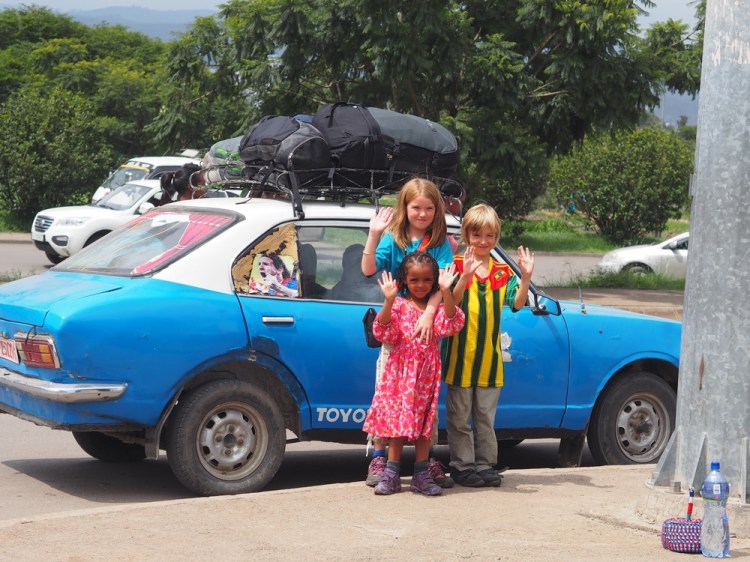
Goodbye Ethiopia!
 Five Go Round The World